
Safe Deprescribing in Telepsychiatry: Why Thoughtful Medication Tapering Matters More Than Ever in Pennsylvania
Written By: TrueMynd Psychiatry
Date: May 11th 2026
At TrueMynd Psychiatry, one of the conversations we are having more frequently with patients across Pennsylvania is not just when to start psychiatric medications — but also when it may be clinically appropriate to safely reduce or discontinue them. As psychiatric providers, we believe evidence-based mental health care includes both prescribing and deprescribing. Thoughtful medication management means regularly reassessing whether a medication continues to provide benefit, whether risks have changed over time, and whether patients are fully informed about withdrawal symptoms, tapering strategies, and long-term treatment planning.
Over the past several years, emerging evidence and updated clinical guidance have significantly shifted how the psychiatric community understands antidepressant and benzodiazepine withdrawal. Multiple peer-reviewed publications now recognize that withdrawal symptoms can occur more commonly than previously appreciated, especially after long-term treatment or rapid dose reduction. Recent literature also emphasizes the importance of individualized tapering plans, collaborative decision-making, and close clinical monitoring throughout the deprescribing process.
For patients receiving telepsychiatry services, this conversation is particularly important. Modern telehealth platforms now allow psychiatric providers to maintain highly structured follow-up schedules, symptom tracking, medication monitoring, psychotherapy integration, and collaborative care planning — all of which are essential during medication tapering. Telepsychiatry has evolved beyond simple medication refills. At TrueMynd Psychiatry, we utilize comprehensive virtual psychiatric care to help support safe, evidence-based deprescribing while still maintaining continuity, accessibility, and individualized treatment.
One of the most important concepts patients should understand is that withdrawal symptoms are not always the same thing as relapse. Research published in Therapeutic Advances in Psychopharmacology found that many current clinical practice guidelines historically lacked detailed recommendations for distinguishing antidepressant withdrawal symptoms from recurrence of anxiety or depression. Common withdrawal symptoms may include dizziness, insomnia, nausea, anxiety, irritability, “brain zaps,” sweating, flu-like symptoms, and emotional dysregulation. This distinction matters clinically because patients may incorrectly assume their underlying condition has returned when, in reality, their nervous system may simply need a slower tapering process and additional support.
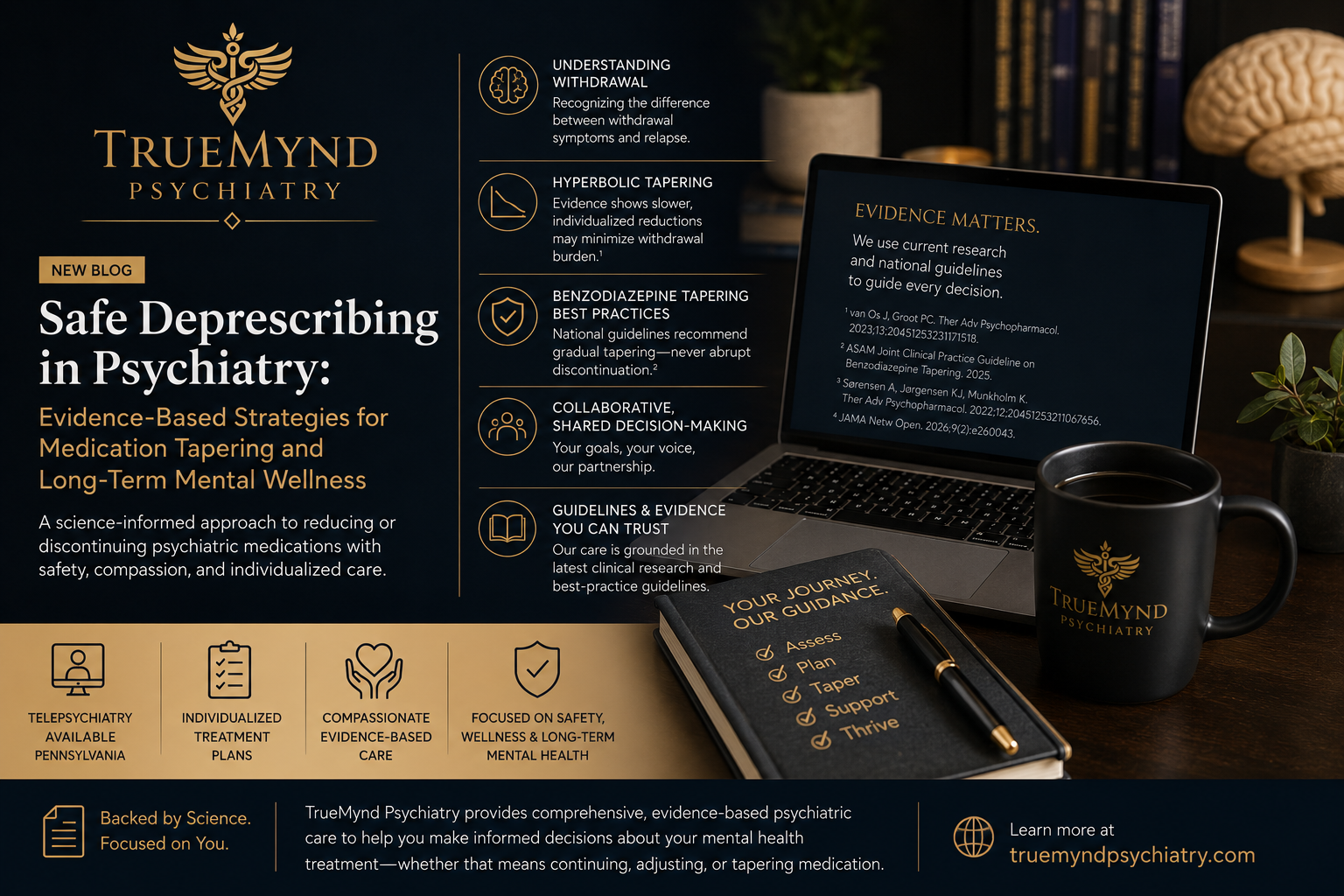
Recent evidence also supports the concept of hyperbolic tapering, particularly for antidepressants and benzodiazepines. A 2023 prospective cohort study published in Therapeutic Advances in Psychopharmacology demonstrated that smaller, gradual dose reductions over longer periods were associated with significantly lower withdrawal burden. Similarly, deprescribing services internationally have increasingly adopted “stabilize-reduce, stabilize-reduce” approaches that prioritize individualized pacing and patient tolerance rather than rigid timelines.
For benzodiazepines specifically, updated guidance from the American Society of Addiction Medicine (ASAM) Benzodiazepine Tapering Guideline emphasizes that benzodiazepines should not be discontinued abruptly in physically dependent patients because withdrawal can become medically dangerous or even life-threatening. The guideline recommends gradual dose reductions, shared decision-making, psychosocial support, and individualized taper schedules. These recommendations align closely with the philosophy we practice at TrueMynd Psychiatry: collaborative, patient-centered psychiatric care that balances symptom management with long-term wellness and safety.
At TrueMynd Psychiatry, we recognize that deprescribing conversations can feel emotionally complex. Many patients fear losing stability, fear relapse, or worry they will feel “unsupported” if medications are reduced. Others may experience frustration after years of being prescribed medications without ongoing reevaluation. That is why deprescribing should never be framed as “simply stopping medications.” Instead, it should involve shared decision-making, trauma-informed communication, psychotherapy support when appropriate, careful monitoring, and realistic discussions about both benefits and risks. The newly published 2026 American Society of Clinical Psychopharmacology Consensus Statement reinforces that psychotropic regimens should undergo ongoing reassessment and that deprescribing decisions should actively involve patient participation.
Importantly, deprescribing is not appropriate for every patient. Some individuals benefit greatly from long-term psychiatric medication treatment and may require ongoing maintenance therapy. Evidence-based psychiatry means recognizing both realities: medications can be life-saving, and medications can also require periodic reevaluation. Safe psychiatric care is rarely “one-size-fits-all.” At TrueMynd Psychiatry, our goal is to help patients understand their options, reduce stigma around medication changes, and provide transparent, evidence-based recommendations grounded in current psychiatric literature and best-practice guidelines.
As telepsychiatry continues to expand across Pennsylvania, we believe psychiatric providers have an ethical responsibility to move beyond “refill culture” and toward a more collaborative, medically informed model of long-term mental health care. Whether discussing antidepressants, benzodiazepines, mood stabilizers, stimulants, or sleep medications, deprescribing should become part of the broader conversation about wellness, informed consent, and sustainable psychiatric treatment planning.
Clinical Practice Guidelines & Peer-Reviewed Evidence
- ASAM Benzodiazepine Tapering Guideline
- JAMA Network Open – Recommendations for the Deprescribing of Psychotropic Medications
- Therapeutic Advances in Psychopharmacology – Hyperbolic Tapering Outcomes
- Clinical Practice Guideline Recommendations on Tapering Antidepressants
- PLOS ONE – Deprescribing Services Study
- Cambridge Psychological Medicine – Evidence on Antidepressant Withdrawal